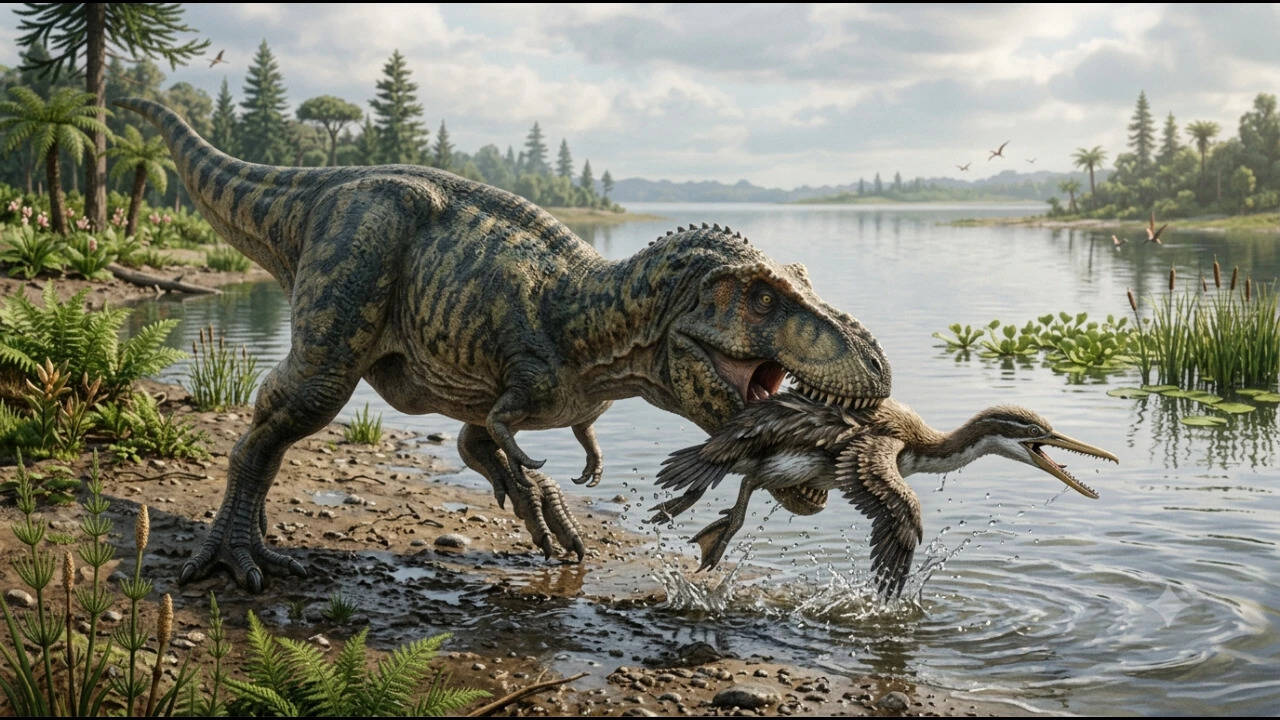
Researchers report finding a 66-million-year-old feather preserved inside fossilized dinosaur poop (coprolite). The discovery comes from remains dating to the period around the asteroid impact that helps explain the mass extinction that ended the non-avian dinosaurs.
According to the researchers, the feather belonged to an extinct bird and has a comparatively “primitive” structure. They interpret this as evidence that feather properties related to insulation and feather shedding (moulting) could influence how some bird lineages coped with harsh, prolonged post-impact winter conditions. One outlet also describes the coprolite as containing additional materials besides the feather—such as fish scales and bird bones—supporting the idea that the feces records specific prey and behavior.
While both accounts focus on insulation and moulting as potentially important for survival, they differ slightly in emphasis: one centers more directly on why surviving birds endured the impact winter, while the other highlights the broader range of inclusions found in the coprolite.