Dawn (Pakistan)
Centre-left
How the US controls Iraq's oil revenues
US forces are set to withdraw on Wednesday from their last bases in Iraq, a departure celebrated as a victory by Iran and its allies, which have deep influence in the country where 4,500 Americans died during more than two decades of war.
Still, since its 2003 invasion of Iraq, the US has held effective control of the country’s oil revenue dollars, giving Washington extraordinary leverage over Baghdad’s affairs, with implications for regional dynamics involving Iran.
How does the US control Iraq’s oil revenues?
This stems primarily from the management of Iraq’s oil income through the Federal Reserve Bank of New York.
After the 2003 invasion, the Coalition Provisional Authority (CPA), led by the US, set up the Development Fund for Iraq (DFI), held at the New York Fed, and designed to collect the oil revenues for use in reconstruction and development efforts.
A US Marine watches a woman and her child during a series of raids to hunt arms and guerrilla suspects south of Baghdad, Iraq on December 1, 2004. —Reuters/File
The Fund also aimed to protect the Iraqi oil revenues from lawsuits and claims relating to Saddam Hussein’s rule.
An executive order by then president George W. Bush to set up the arrangement has been renewed by every president since. The DFI eventually became an account of the Central Bank of Iraq at the New York Federal Reserve, as it remains today.
What leverage does this give the US over Iraq?
Oil is Iraq’s most important revenue source, making up about 90 per cent of the state budget. This gives Washington significant sway over the country’s economic and political stability.
When the Iraqi government asked US troops to leave in 2020, Washington reportedly threatened to cut Iraq’s access to the New York Federal Reserve funds, with Baghdad ultimately backing down.
A US army tank takes up a position near the scene of a suicide bomb attack in Baghdad, Iraq on July 14, 2005. —Reuters/File
While Iraq has gained more control over its financial affairs since the early years of the occupation, the link highlights the enduring influence of the US on the economic landscape of Iraq, even as the latter seeks to assert sovereignty and independence.
Why has the arrangement endured for so long?
The system helped anchor Iraq’s financial stability and safeguards state finances, government officials told Reuters on condition of anonymity.
It boosts international confidence in the management of oil income, eases access to US dollars needed for trade and imports, and protects revenues from external claims and financial shocks, including claims by creditors and lawsuits, they said.
A giant Iraqi flag hangs off the reconstructed 12th century “Hadba” leaning minaret at the historic Great Mosque of al-Nuri in the old city of Mosul on September 29, 2026 as Iraq marks the withdrawal of the US-led anti-Islamic State coalition forces from the country. —AFP
The arrangement supports exchange-rate stability and underpins confidence in the Iraqi economy, while working to strengthen domestic financial institutions and assert greater economic sovereignty, they added.
It also allows the government to push back against some actors, such as Iran-allied groups, who seek fewer curbs on dollar access. Last year, the US imposed sanctions on Iraqi banks and individuals it accused of laundering money for Iran.
How has this arrangement affected Iraq?
The heavy curbs on US dollar supply led to a parallel, informal market for dollars, resulting in a price spread between the official exchange rate set by the central bank and that on the black market.
The price difference is essentially a risk premium for dealing outside the formal system.
In his second term, President Donald Trump has pursued a campaign of maximum pressure on Iran, with Iraq often caught in the crossfire as Tehran has used it as a vital economic lung.
The war he launched with Israel against Iran on February 28 added further pressure on Baghdad.
What is the status of Iraq’s oil revenue management?
Iraqi oil revenues remain in the custody of the Federal Reserve Bank of New York.
CBI has historically used dollar auctions, formally known as the foreign currency window, as the main mechanism to supply dollars. Private banks and exchange houses could bid daily to purchase US dollars using Iraqi dinars.
Iraq formally ended the auction system at the start of 2025 after significant US pressure, part of a broad crackdown on alleged siphoning of dollars to sanctioned parties, especially Iran.
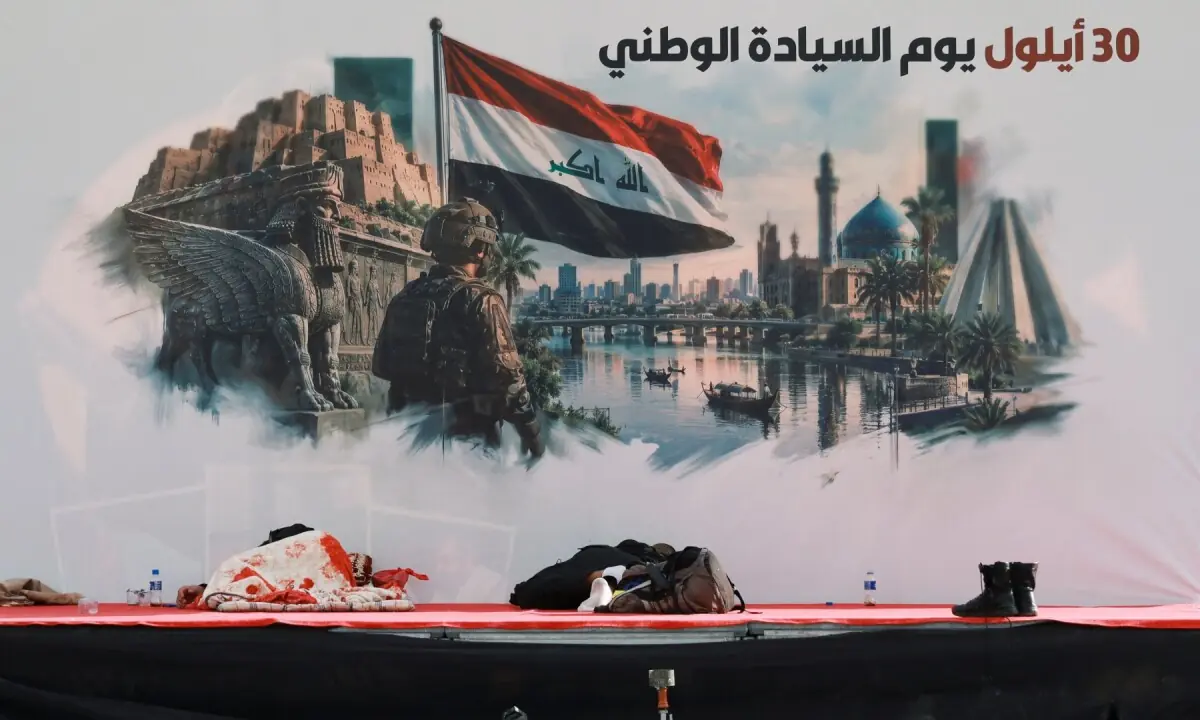
Header image: A stage with a banner for Sovereignty Day in Baghdad, Iraq on September 30, 2026. —Reuters
2 hours ago