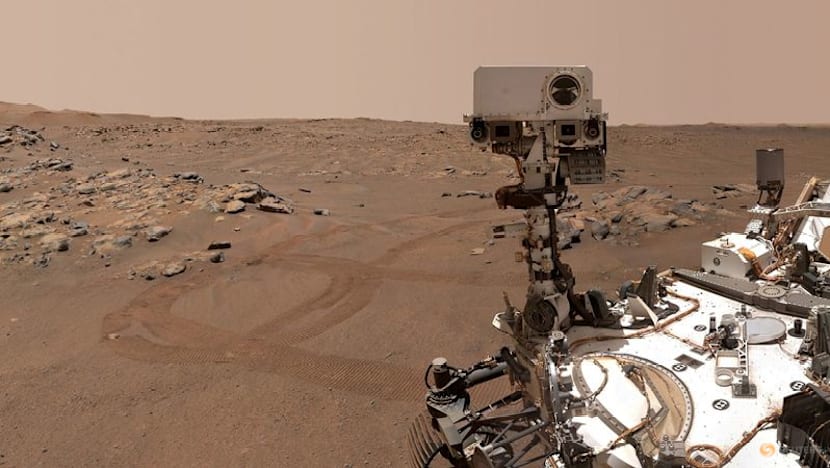
NASA’s Perseverance rover has driven farther than any other off-Earth vehicle, reaching 28.1 miles (45.2 km) on the Martian surface since arriving in 2021. The milestone occurs about 5½ years into its mission to explore whether Mars ever had conditions suitable for microbial life. NASA says the rover’s engineering systems remain healthy, including redundant components, and it is expected to keep operating into the 2030s.
Perseverance is currently working in and around Jezero Crater, a site believed to have been a lake basin fed by water from an ancient river system. The rover’s progress toward an area called Idubi takes it across terrain described by NASA as among the oldest in the solar system. NASA attributes much of its mobility success to advanced autonomous navigation, including AutoNav, which relies on stereo imaging, 3D mapping, and onboard path selection, with the majority of drives carried out without human intervention.
Outlets also highlight Perseverance’s scientific achievements alongside the driving record, including NASA’s previously reported discovery of a potential biosignature in ancient rocks. The mission has been extended to explore the crater region through about the end of 2028, and NASA says the rover’s power system remains capable of delivering long-term energy.