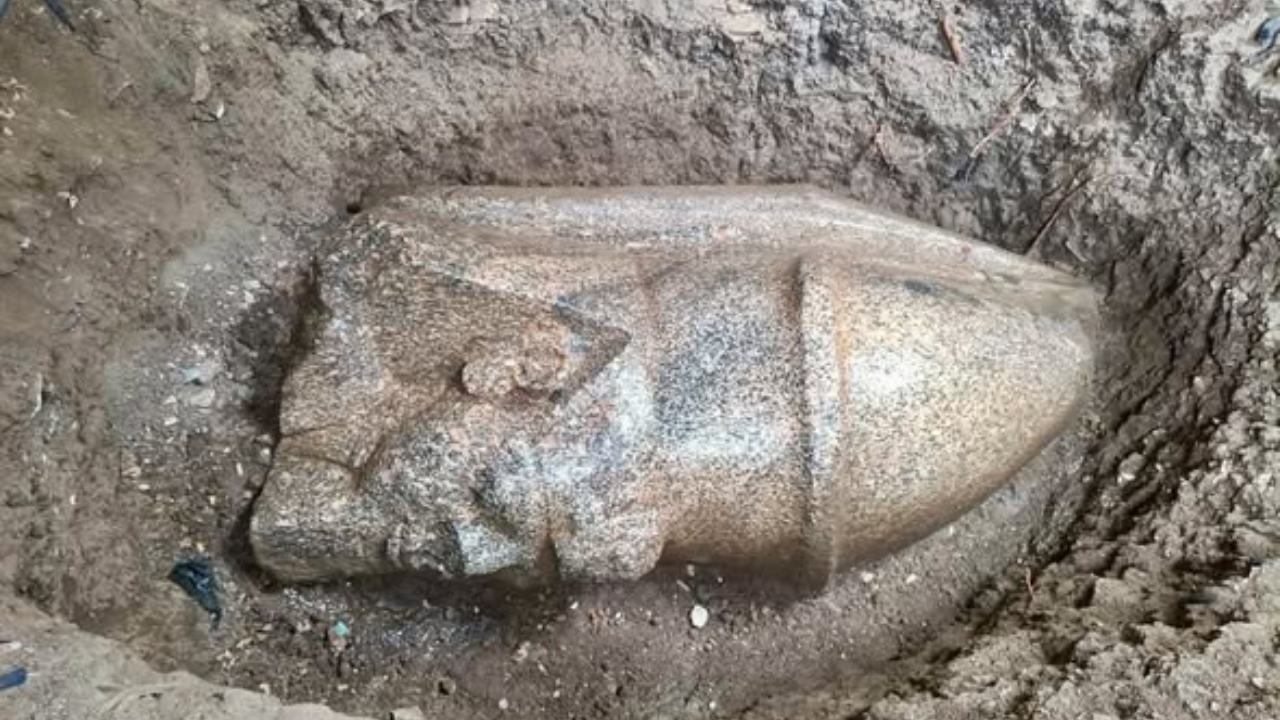
An Egyptian farmer in the Nile Delta village of Behbeit al-Hagar (Behbeit El-Hagar) uncovers a large stone while working his land, prompting archaeologists and local antiquities officials to begin excavations. Officials recover a substantial head believed to belong to a monumental statue of Pharaoh Ramses II, along with other statue fragments.
Subsequent digging finds additional pieces associated with two separate colossal statues of Ramses II, with some fragments described as smaller figures bearing inscriptions. The discovery is reported to add to knowledge about the presence and political reach of the New Kingdom in the Nile Delta, since Ramses II’s reign is tied to major royal building and iconography.
Outlets differ mainly in emphasis and framing. Some describe the statues as “28-foot” and highlight a “biblical pharaoh” connection, while other reports focus more on the archaeological aspects—namely the identification of the fragments, the number of statues represented, and the role of local authorities in retrieving and documenting the finds. All accounts tie the discovery to the same village and the same initial farmer-initiated discovery.