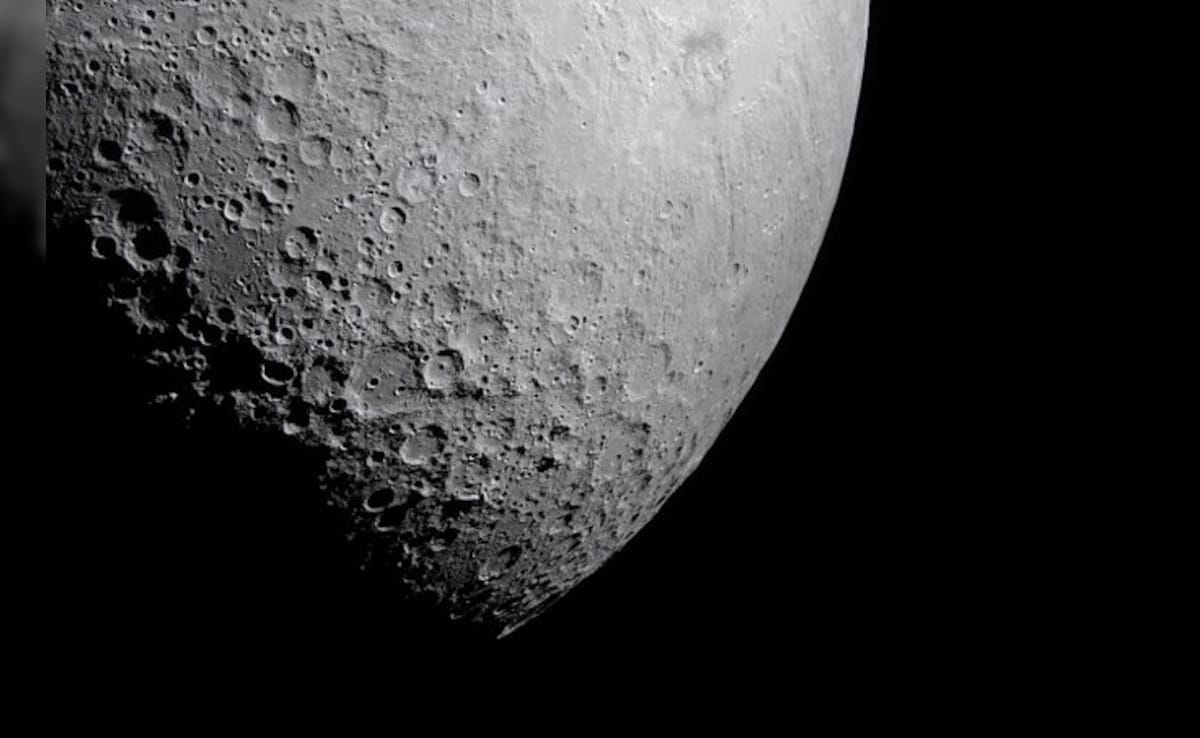
ISRO says scientists identify strong evidence of possible subsurface ice in the Moon’s south-polar region using data from the Chandrayaan-2 orbiter. The assessment is based on measurements from the Dual Frequency Synthetic Aperture Radar (DFSAR), a microwave imaging instrument that can probe beneath the lunar surface rather than only observing exposed terrain.
According to the reports, researchers examine some of the coldest craters near the south pole and find particularly strong indications of subsurface ice in a crater about 1.1 kilometres wide. This crater lies within the larger Faustini crater. The crater also shows a distinctive lobate-rim, described as a flow-like morphology, which researchers say could be consistent with an impact that penetrated an ice-rich subsurface layer.
The findings add to a broader set of observations from Chandrayaan-2, including earlier detections of signatures associated with water molecules and hydroxyl on parts of the lunar surface, and newer efforts to produce high-resolution polar maps. ISRO notes that the results may inform future lunar mission planning, including work aimed at locating and using potential water resources.