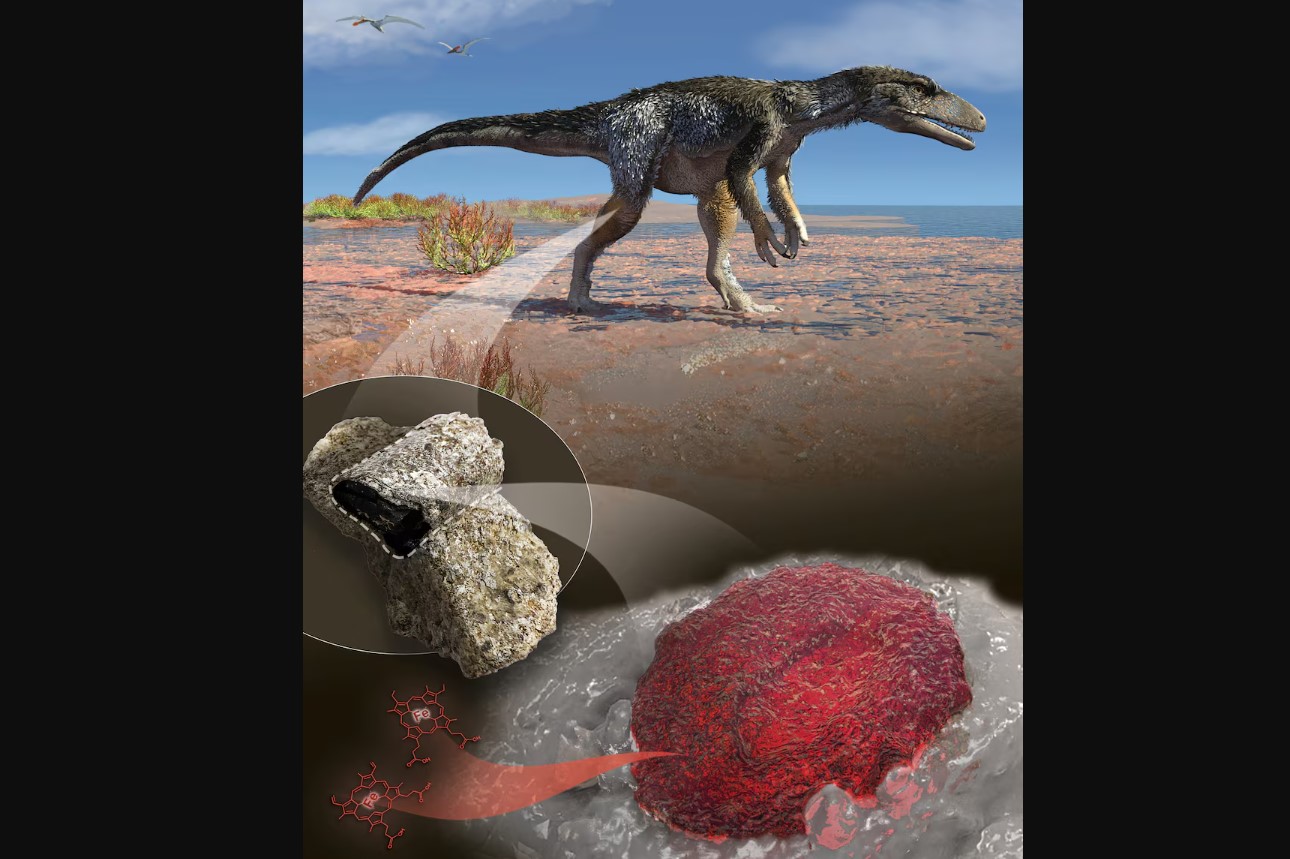
Scientists report strong new evidence that red blood cells may be preserved in a dinosaur fossil discovered in Brazil. The research describes microscopic mineralized structures in bone from the right leg of a medium-sized meat-eater, Aratasaurus museunacionali, which lived about 115 million years ago during the Cretaceous Period. The study argues the structures resemble fossilized red blood cells.
Other researchers urge caution, saying similar mineral features can form through processes other than blood preservation. The New York Times’ Science section highlights that while the findings appear compelling, there is ongoing debate about whether mineralized structures in dinosaur bones can be reliably interpreted as blood cells. Together, the accounts focus on both the new study’s claims and the scientific uncertainty around diagnosing the origin of such microscopic features.