Meta introduces Muse Ember, a smaller “most efficient” model aimed at the repeated, high-volume work carried out by AI agents. Meta says Ember is designed for activities such as tool calls, coding subtasks, routing, extraction, and parsing long documents. Several outlets frame it as part of a broader “team of models” approach rather than a single all-purpose system.
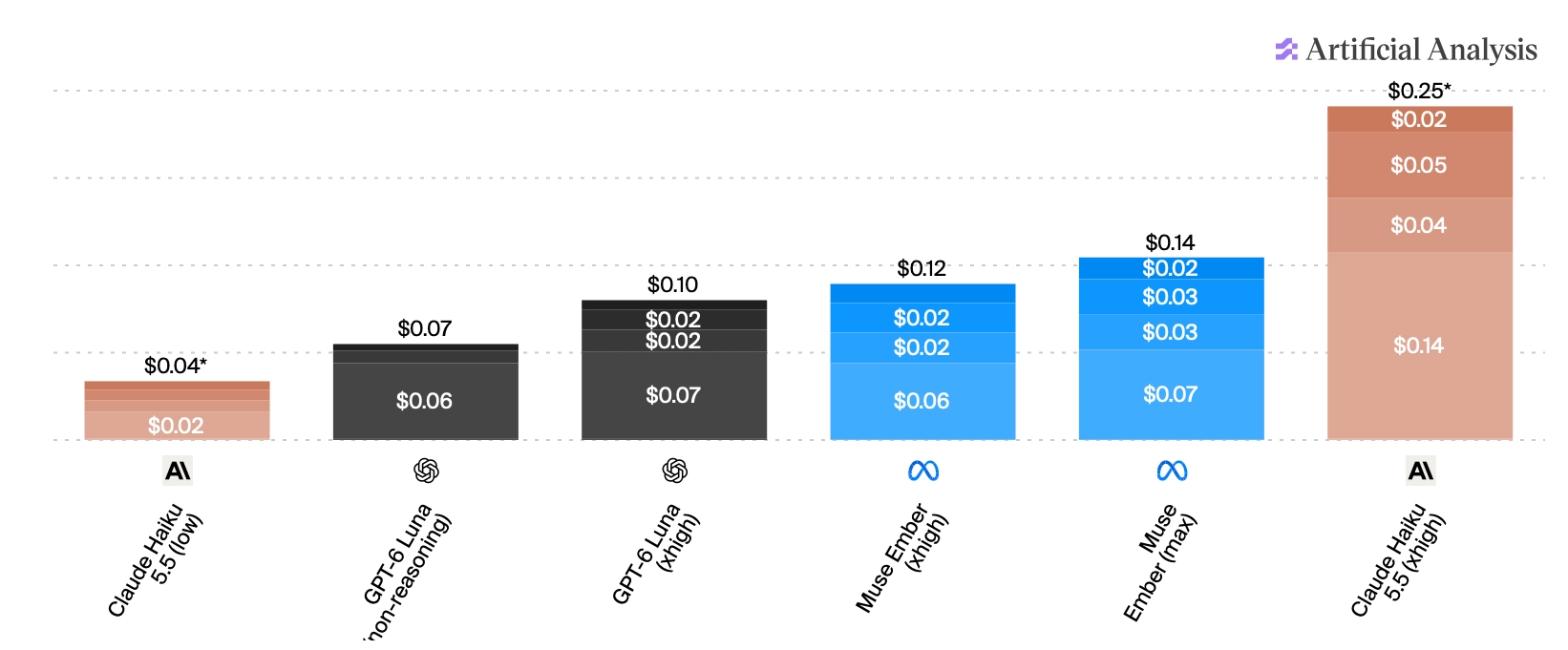
Outlets also focus on price and performance positioning. Multiple reports cite Ember’s token pricing—$0.10 per million input tokens and $0.50 per million output tokens for up to certain context limits—and compare it with Claude Haiku 5.5 and GPT-6 Luna. Several also reference benchmark comparisons on Artificial Analysis’s Intelligence Index and claims that Ember matches Claude Haiku’s intelligence score at about a third of the cost per task, though some emphasize these are vendor or third-party index results.
Coverage differs mainly in how much detail is provided about pricing thresholds, how performance comparisons are framed, and whether additional background is added. For example, SiliconANGLE includes a note about Muse Ember being trained using Meta’s “Muse Wonder,” while other outlets largely concentrate on the headline functions and pricing.