


Benin holds another political transition with the inauguration of President Romuald Wadagni, according to reports from ABC News and the Winnipeg Free Press and Taipei Times describe the broader context of how voodoo traditions persist and gain public influence in the country. Across the coverage, the central theme is that voodoo, long present in Benin’s social and cultural life, continues to operate in the public sphere despite periods of suppression and restrictions in earlier years. The articles connect this trajectory to Benin’s evolving political landscape, describing how religious and cultural identities—including voodoo—intersect with democratic participation and public debate. While the outlets vary in emphasis, they generally align on two points: a recent presidential transition is underway in Benin, and voodoo in the country has moved from marginalization toward a more visible role as part of civic and political life. The reporting frames voodoo’s increased prominence as a gradual change over time rather than a sudden shift, and it situates that change within Benin’s ongoing democratic development.
Benin inaugurates new president amid political transition and ongoing discussion of voodoo’s role
Benin holds another political transition with the inauguration of President Romuald Wadagni, according to reports from ABC News and the Winnipeg Free Press and Taipei Times describe the broader contex...
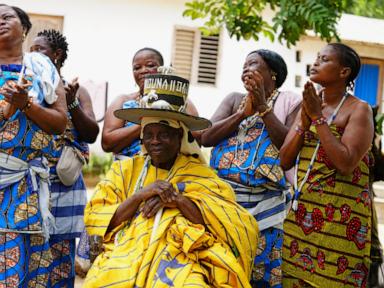
- Benin inaugurates President Romuald Wadagni as part of a political transition.
- Multiple outlets describe voodoo as having persisted despite earlier suppression or restrictions.
- Reports state voodoo’s public role in Benin becomes more visible over time.
- Coverage links voodoo’s increased influence to Benin’s evolving democratic and civic life.
- The articles present the story as part of Benin’s broader political and cultural changes.
Benin recently inaugurated President Romuald Wadagni as its new leader in the latest transition in the West African nation
2 months ago
Milo Yiannopoulos detained by ICE and deported to the UK
Far-right British commentator Milo Yiannopoulos is detained by U.S. Immigration and Customs Enforcement (ICE) and later...

INEC declares Ademola Adeleke re-elected governor of Osun State
The Independent National Electoral Commission (INEC) declares Governor Ademola Adeleke of the Accord Party winner of the...

UK looks at a loan-style deal to return the Elgin Marbles to Greece
The UK government is exploring whether the Parthenon sculptures known as the Elgin Marbles could be returned to Greece t...