


NASA’s James Webb Space Telescope continues to narrow the mystery of the early universe’s “little red dots,” first reported in 2022. Multiple outlets describe how follow-up observations provide the strongest evidence to date that at least some of these compact, red sources are not ordinary galaxies or stars. A research team led by Vasily Kokorev at the University of Texas at Austin analyzes the spectrum of a particular “little red dot,” using its spectral characteristics to link the object to the broader class of candidates. The study is presented as a step toward resolving the “little red dots” puzzle that has challenged astronomers for several years, with some earlier speculation questioning whether the objects could indicate problems in existing models. The new results rely on Webb’s ability to obtain detailed spectral information, which helps distinguish the objects’ nature from other explanations. While the reporting emphasizes this as the strongest evidence yet and a move closer to a solution, it also frames the work as part of an evolving effort to confirm how these sources fit into early-universe conditions. The findings collectively point to “black hole stars” as a leading explanation.
James Webb finds strongest evidence yet that “little red dots” are black hole stars
NASA’s James Webb Space Telescope continues to narrow the mystery of the early universe’s “little red dots,” first reported in 2022. Multiple outlets describe how follow-up observations provide the st...

- “Little red dots” were first discovered with NASA’s James Webb Space Telescope in 2022.
- A new study uses the spectrum of one particular “little red dot” to test its nature.
- Researchers report Webb’s data as the strongest evidence yet that the objects are black hole–powered sources rather than normal objects.
- The work is led by Vasily Kokorev at the University of Texas at Austin.
- The findings are presented as bringing astronomers closer to explaining the abundance and brightness of these early-universe sources.
The mystery of the universe’s “little red dots” is becoming a little clearer thanks to the James Webb Space Telescope.
3 months agoFor three years they've been one of the strangest puzzles in astronomy. Tiny, mysterious red dots scattered across the early universe, so abundant and so bright that some researchers wondered if they had "broken" cosmology itself. Now the James Webb Space Telescope has captured the most detailed look yet at one of them, and the answer it reveals is as exotic as the name suggests: a star sized object that is, in fact, a black hole wearing a disguise.
3 months agoA new study from NASA's James Webb Space Telescope is galvanizing an explanation for those little red dots in the early universe.
3 months agoAstronomers using the James Webb Space Telescope may be close to solving the mystery of "little red dots" in the early universe.
3 months agoThe complex puzzle known as little red dots has become more complete since their initial discovery by NASA's James Webb Space Telescope in 2022. Now a particular little red dot's spectrum is helping connect many of the pieces.
3 months agoThe complex puzzle known as little red dots has become more complete since their initial discovery by NASA’s James Webb Space Telescope in 2022. Now a particular little red dot’s spectrum is helping connect many of the pieces. A team of astronomers led by Vasily Kokorev at the University of Texas at Austin identified the […]
3 months ago
High Court ruling backs local environmentalists against proposed coal mine
Community environmentalists win a case in Australia’s High Court against an international mining company over a proposed...

Cornell hires Sally Yates to review its handling of 2024 sexual assault allegations
Cornell University hires former U.S. Justice Department official Sally Yates to lead an independent internal review into...
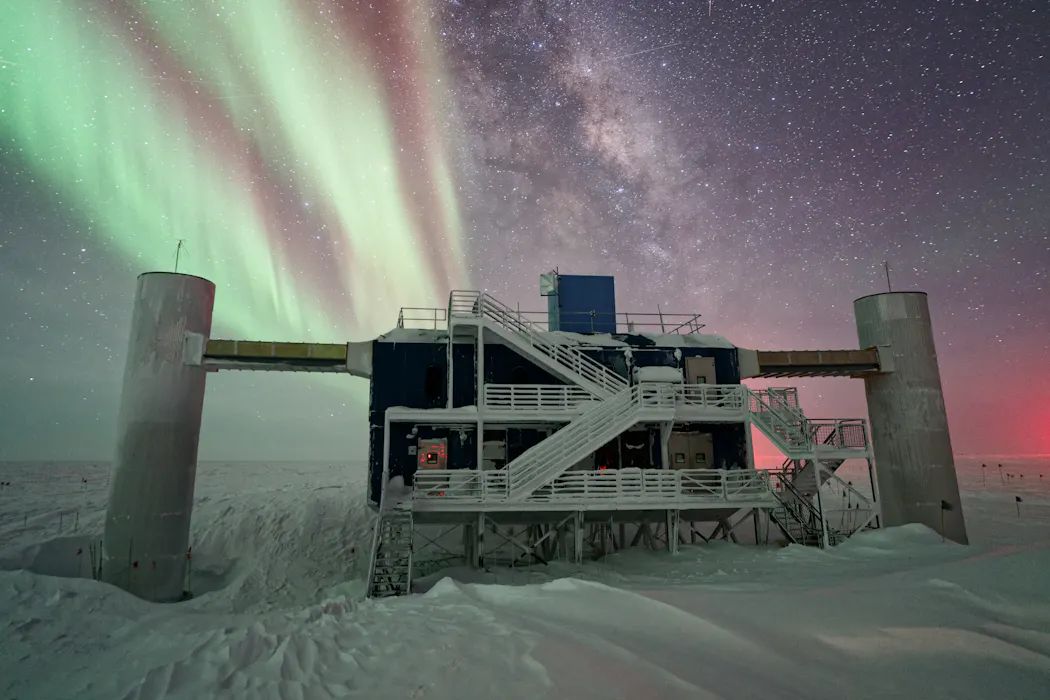
Belgian physicist Francis Halzen wins 2026 Nobel Prize for Antarctic neutrino telescope
Belgian physicist Francis Halzen wins the 2026 Nobel Prize in Physics for turning about a cubic kilometre of Antarctic i...