


Researchers analyzing data from NASA’s James Webb Space Telescope report new findings about the exoplanet HD 80606 b, a gas giant orbiting a Sun-like star. The planet has a mass estimated at about four times that of Jupiter and follows a highly elliptical orbit, bringing it unusually close to its host star at certain points in its year. This close approach results in strong heating of the planet’s atmosphere, which the team describes as the planet being “roasted.” The researchers are presenting their study and preliminary results at the 248th meeting of the American Astronomical Society (AAS248) in Pasadena, California. NASA’s account highlights Webb’s role in capturing observations of the planet during the period of intense stellar irradiation associated with its near-star passages. Phys.org similarly summarizes the same Webb-based analysis and the planned presentation timing at AAS248. Across the reports, the key points are the use of Webb observations, the planet’s approximate mass, its extremely elliptical orbit, and the resulting extreme heating near periastron.
James Webb Observations Study Exoplanet HD 80606 b’s Extreme Heating
Researchers analyzing data from NASA’s James Webb Space Telescope report new findings about the exoplanet HD 80606 b, a gas giant orbiting a Sun-like star. The planet has a mass estimated at about fou...
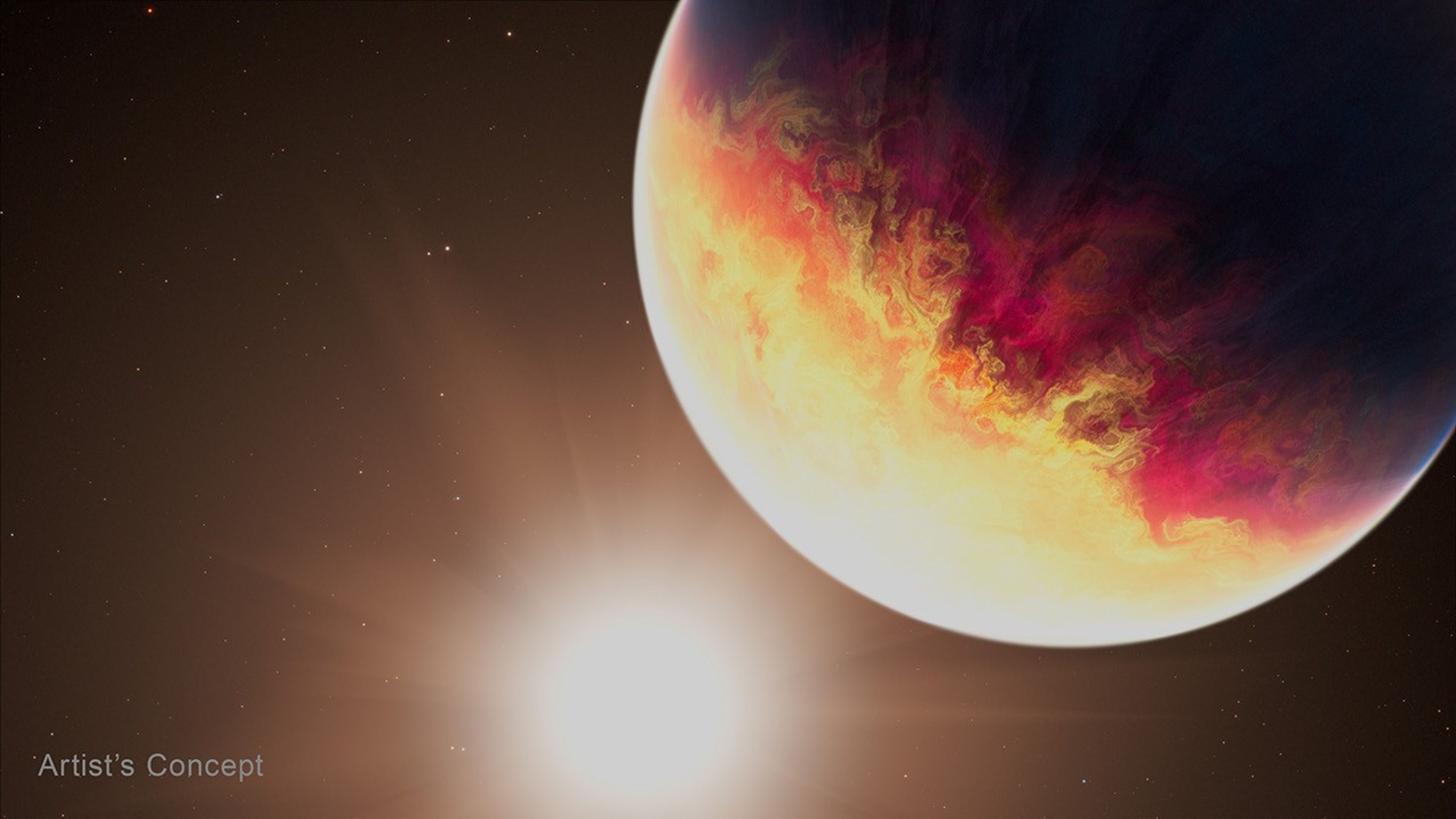
- HD 80606 b is a gas giant exoplanet with an estimated mass about four times Jupiter’s.
- It has a highly elliptical orbit that brings it close to its Sun-like host star.
- Researchers analyze observations from NASA’s James Webb Space Telescope to study the planet’s heating.
- The team presents the study and preliminary findings at the 248th meeting of the American Astronomical Society (AAS248) in Pasadena, California.
- Reports describe the planet’s atmosphere as experiencing extreme heating during its closest approaches to the star.
One well-done gas giant, coming right up! That's the latest from researchers analyzing NASA's James Webb Space Telescope observations of HD 80606 b, an exoplanet four times the mass of Jupiter with an extremely elliptical orbit that sweeps close by its sun-like star. The research team is presenting its study and preliminary findings Tuesday at the 248th meeting of the American Astronomical Society (AAS248) in Pasadena, California.
2 months agoOne well-done gas giant, coming right up! That’s the latest from researchers analyzing NASA’s James Webb Space Telescope’s observations of HD 80606 b, an exoplanet four times the mass of Jupiter with an extremely elliptical orbit that sweeps close by its Sun-like star. The research team is presenting their study and preliminary findings Tuesday at […]
2 months ago
Lunar eclipse tonight: when the Moon turns red from the UK
A lunar eclipse is due to happen tonight, with the Moon turning red as it passes through Earth’s shadow. Reports from UK...

Footage shows floodwaters in Nepal moving large rocks and damaging areas
Footage emerging from Nepal shows the force of floodwaters on Wednesday, including rocks being pushed and people appeari...
Near-Total Lunar Eclipse to Turn Moon Reddish Over the Americas
A near-total lunar eclipse occurs on Thursday night, with Earth’s shadow covering most of the Moon and making it appear...