


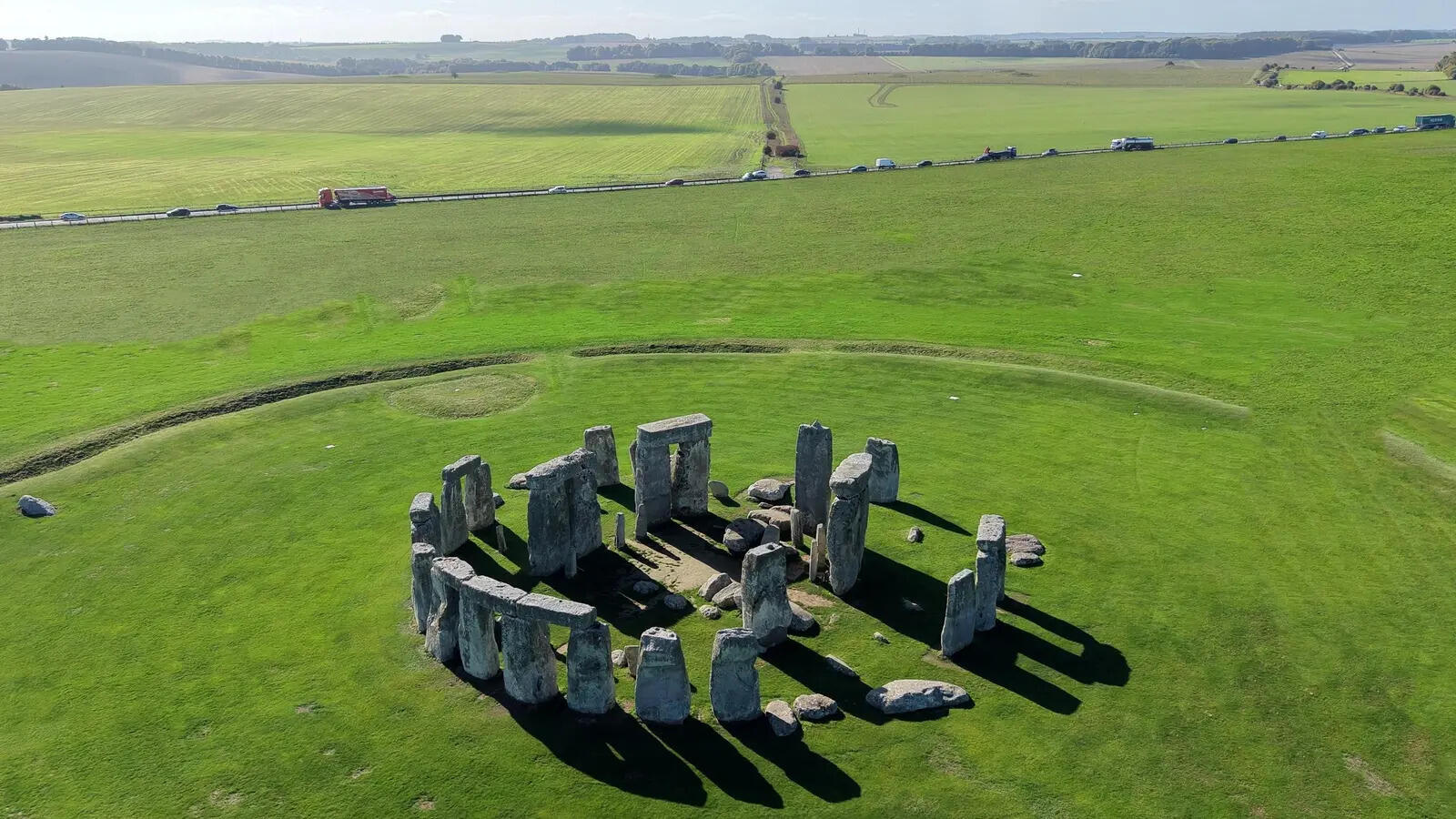
Archaeologists in Wiltshire report discovering a wooden monument dating to about 5,000 years ago, located a few miles from Stonehenge near Bulford. Multiple accounts describe the structure as consisting of two large wooden posts set in a deliberate arrangement. The posts align with the sun at key times of year: the summer (midsummer) sunrise and the winter (midwinter) sunset. Researchers say the precise alignment indicates Neolithic people were already tracking solar movements and likely used the site for ceremonial or astronomical purposes.
The discovery is significant because it predates Stonehenge by roughly 500 years, according to the reports. Some researchers propose that the earlier monument could have influenced later traditions or site planning associated with Stonehenge, though the findings are presented as evidence that sophisticated practices existed before Stonehenge’s construction. Overall, the accounts emphasize the monument’s age, its solstice-related orientation, and its potential to shed light on how ancient communities in the region understood and incorporated the sun into ritual life.


