


Volkswagen is set to hold supervisory board discussions on a major restructuring proposal that could be among the largest in the company’s history. Multiple outlets report the plan includes cutting up to 100,000 jobs worldwide and closing four Volkswagen Group plants in Germany. The proposals are being considered amid financial pressure, including a steep fall in profits and a reduced revenue outlook, alongside intensifying competition—particularly from China. Volkswagen is also preparing for softer demand in the Chinese market and expects sales to decline this year after previously forecasting growth. The restructuring is linked to broader efforts to reduce costs and change how the group builds vehicles, with some reporting indicating a potential reduction in the number of car models it makes. Unions and workers are preparing demonstrations across multiple German sites ahead of the board meeting. One report also says Volkswagen has already moved toward job-cut targets of 50,000 in earlier phases, with additional reductions under consideration. Several sources describe the talks as a critical test of the company’s overhaul, with plant closures and the full scale of job cuts subject to board approval.
Volkswagen discusses up to 100,000 job cuts and potential closure of four German plants
Volkswagen is set to hold supervisory board discussions on a major restructuring proposal that could be among the largest in the company’s history. Multiple outlets report the plan includes cutting up...
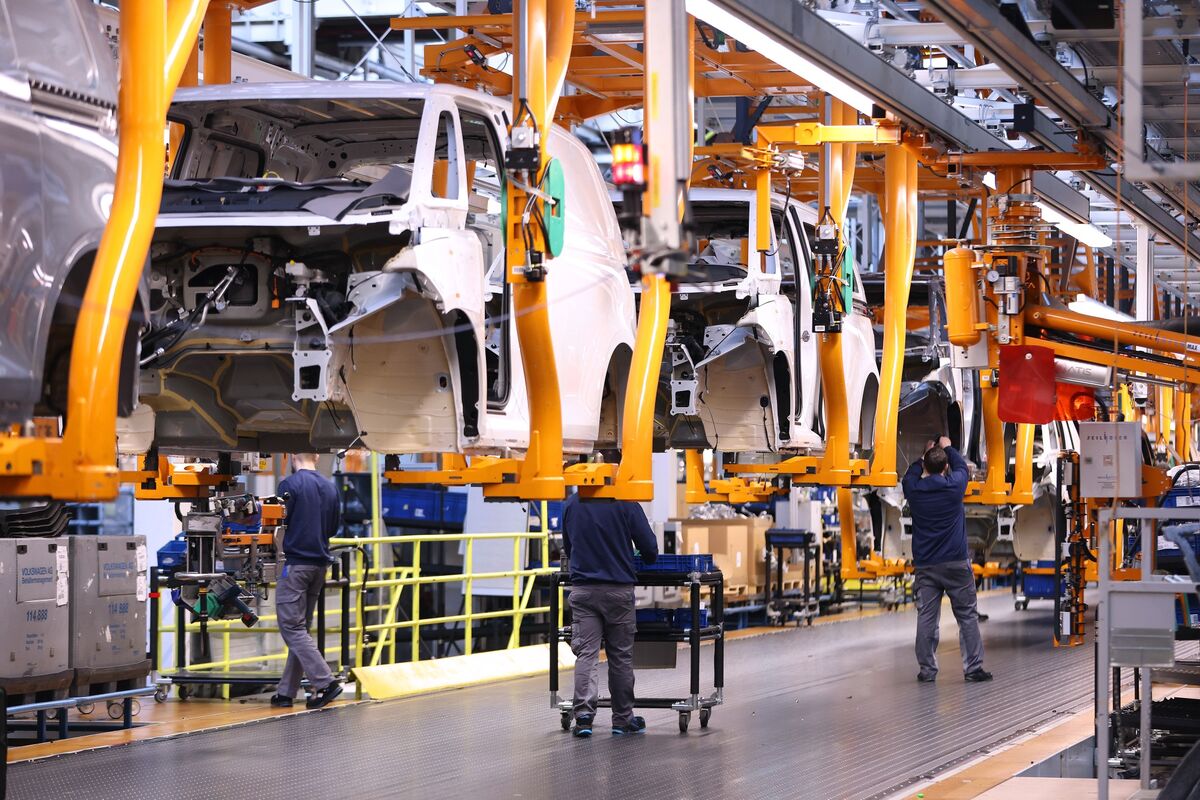
- Volkswagen management meets to discuss a restructuring proposal at the supervisory board level.
- The proposal reportedly includes job cuts of up to 100,000 worldwide.
- Reports say the plan could involve closing four Volkswagen plants in Germany.
- Volkswagen faces pressure from falling profits and tough competition, especially in China, where sales are reported to have declined sharply.
- Unions and workers plan protests at multiple German sites in response to the job-cut and closure plans.
Volkswagen's second-quarter operating profit fell nearly 10% to 3.5 billion euros, missing estimates, as the carmaker scrapped its 2026 revenue growth forecast. CFO Arno Antlitz called the roughly 4% margin a wake-up call demanding a second restructuring. China sales dropped over 31% in the first half. VW is weighing up to 100,000 job cuts, with four German plants still lacking confirmed use cases beyond 2030.
1 month agoCarmaker, which is pushing through cost-cutting programme, expects sales to fall by up to 3% this yearVolkswagen has reported a steep fall in profits and cut its revenue forecast amid a sales slump in China, as the German carmaker pushes through a brutal cost-cutting programme that includes slashing up to 100,000 jobs.The world’s second-largest maker of vehicles said it expects sales to fall by up to 3% this year, a dramatic reversal on a previous forecast for a 3% increase on last year’s €321.9bn (£275.3bn), because of a sales slump in the highly competitive Chinese market. Continue reading...
1 month agoSharp cut heaps pressure on German carmaker’s leader as he looks to push through massive round of job cuts
1 month agoFactory closures, model cancellations and job cuts on the cards as firm races to rebuild margins The Volkswagen Group is facing one of the toughest battles of its recent history as it scrambles to reduce costs and stay competitive in the face of Chinese rivals, while satisfying the demands of its heavily unionised workforce in Germany. Company boss Oliver Blume came clean to staff last week about the need to cut as many as 100,000 jobs – around one in seven of its global workforce and 50,000 more than previously communicated. "Group headcount has been growing for decades to a level that's no longer viable today," Blume reportedly told staff via an interview published on the company's intranet. He said that VW "could not confirm a competitive workload" for its Emden, Neckarsulm, Hanover and Zwickau factories into the 2030s. All were reported earlier this summer to be slated for closure, although Blume has said he wanted "smart solutions" to keep the plants alive. Trouble at home The VW Group's long-successful strategy has been to leverage Germany's automotive skillsets to build cars locally for global export. By leaning on the brand power of VW, Porsche and Audi, the group could charge more to cover the extra cost of building there. That model is crumbling, however, as Chinese rivals erode VW's market share not just in China but also globally. Additional US tariffs imposed by President Trump have also eaten into that margin buffer. European sales have stagnated, meanwhile, dropping overall German car production to 4.2 million units last year, down from stable pre-Covid figures of five-to-six million annually. The Chinese share of the European market has grown to around 10% in the first six months of this year, according to financial analyst Morningstar. That has raised concerns that Germany's car sector may face "a lasting reduction in scale," Tuomas Ekholm, the firm's head of corporate ratings for automotive, said in a note to investors. That creates a danger. By staying concentrated in Germany, VW is caught in a vicious circle: reduced production pushes up costs back up due to the loss of scale benefits. VW management wants to cut costs by reducing model complexity, slimming the workforce, tackling over-capacity and lowering the costs of developing and producing cars. That, however, brings the company into conflict with the unions and the powerful VW Works Council, which represents workers up to board level. The council, led by Daniela Cavalio, is gunning for Blume over what it calls "activist short-term solutions" such as factory closures, which it says are designed to appease shareholders without respecting previous labour agreements. Where else to build? Germany is too expensive for VW to be competitive. A 2025 report from consultant Oliver Whyman put Germany top globally for per-car production costs at $3307 (£2470), well above the UK in second at $2333. Moving into eastern Europe has long been the preferred solution for western European brands to cut production costs, but the German premiums are accelerating the shift. Mercedes is doubling capacity at its Kecskemét plant in Hungary, next door to Germany, making the C-Class and GLC EVS alongside the new CLA. Building in Hungary is 70% cheaper than in Germany, Mercedes told analysts. BMW also makes the new iX3 in Hungary. VW, meanwhile, is looking to move Golf production to Mexico, and it builds the Polo exclusively in South Africa. All of VW's new small EVs - led by the ID Polo - are being produced in Spain, which has far lower energy costs among other benefits. The factory dilemma The battle now rages over production of those cars that are left in Germany, including flagship models from Porsche, Audi and VW. The plants lined up for potential closure are hardly outdated. Zwickau, for example, was converted in 2020 to build only EVs and clocked up one million of them by 2025, including the VW ID 3 and ID 5 and Cupra Born. Zwickau, which employs 9000, is touted by VW on its website as its "largest and most efficient electric vehicle plant". Emden is another threatened facility not long converted to manufacture EVs. VW wanted to keep production of new-tech models in Germany, but the margins for its EVs are still too thin to sustain high-cost production facilities. Emden and Hanover, home of the ID Buzz, are situated in Lower Saxony, the state that has a 20% voting share in the VW Group, and local politicians there are expected to fight plans for any closures. The so-called 'Volkswagen Law' that gave the state a major say in the company was created to protect VW from outside influence. But another kind of outside influence, in the form of global forces too strong for VW to ignore, has culminated in choices with no good outcome for Germany: either mass job losses or the further decline in the fortunes in the company that came to symbolise the country's industrial might. Blume's touted "smart solutions" to save the plants-for example, reportedly shifting production of some of VW's lower-cost Chinese models to Germany could provide a palatable third way. But a lot of painful decisions still remain.
1 month agoVolkswagen CEO Oliver Blume will meet employees to discuss restructuring plans. Reports suggest up to 140,000 jobs could be at risk. Four German manufacturing plants may also face closure after 2030. This overhaul aims to address competition from Chinese electric vehicle makers. The company seeks to improve performance and maintain market competitiveness.
1 month agoAnd possibly shutter four German plants when he holds three meetings with workers next month.
1 month ago
US moves to target Palestine Action in counterterrorism effort focused on ‘far-left’ groups
The US is taking steps to target Palestine Action as part of a counterterrorism effort aimed at groups described as “far...

Aston Villa agree Ollie Watkins sale to Al Hilal, Nicolas Jackson targeted as replacement
Aston Villa reach an agreement to sell striker Ollie Watkins to Saudi club Al Hilal, according to multiple reports. The...

Unreleased Dolly Parton song locked away in 2015 will be released in 2046
Dolly Parton has an unreleased song, “My Place in History,” that was written and sealed away in 2015 and will not be hea...