


Scientists report that fin whales can take in very large amounts of krill, but feeding efficiency can drop when krill accumulates on the whales’ baleen. Fin whales engulf dense swarms of krill—amounts cited in the research reach up to about 144 kilograms per mouthful—and then expel the water through baleen plates that act like filters. A study referenced by both outlets uses fluid-dynamics modelling and experiments designed to mimic conditions inside the mouth as krill builds up on the baleen. The findings indicate that a small fraction of the baleen must remain unobstructed: about 15% of the baleen needs to stay clear to allow water to flow out effectively. If krill clogging rises beyond that threshold, the expelled-water flow is reduced, which can slow or stall the filter-feeding process. The research uses frozen krill collected from retail sources to simulate how krill mass might accumulate during feeding. The authors say understanding the threshold for baleen clogging can inform conservation and management efforts for fin whales.
Study finds fin whale filter-feeding can slow if krill clogs baleen
Scientists report that fin whales can take in very large amounts of krill, but feeding efficiency can drop when krill accumulates on the whales’ baleen. Fin whales engulf dense swarms of krill—amounts...

- Fin whales can engulf very large mouthfuls of krill, up to about 144 kg per feeding event.
- Krill must be separated from expelled water as whales squeeze water out through baleen plates.
- A study finds feeding efficiency depends on baleen staying at least about 15% clear.
- When krill buildup clogs more of the baleen than allowed, water flow through the filter can slow.
- The research uses fluid-dynamics approaches and simulations/experiments with krill to estimate clogging effects.
Fin whales face feeding challenges due to krill clogging their baleen plates. A recent study indicates nearly fifteen percent baleen must remain clear for efficient water flow. This research explored fluid dynamics with varying krill accumulation levels. Frozen krill from pet stores helped scientists simulate the whale's mouth conditions. Understanding these feeding mechanisms is vital for fin whale conservation efforts.
1 month agoUsually there's safety in numbers, but it doesn't always work that way. Fin whales (Balaenoptera physalus) filter-feed on immense shoals of krill, engulfing colossal mouthfuls of water containing up to 144 kg of the crustaceans. But then the mighty creatures expel the water by squeezing it out through the racks of baleen lining their mouths.
1 month ago
Trump signs order creating U.S. Space Academy for military and civilian space workforce
President Donald Trump signs an executive order creating the U.S. Space Academy, setting up a new institution focused on...
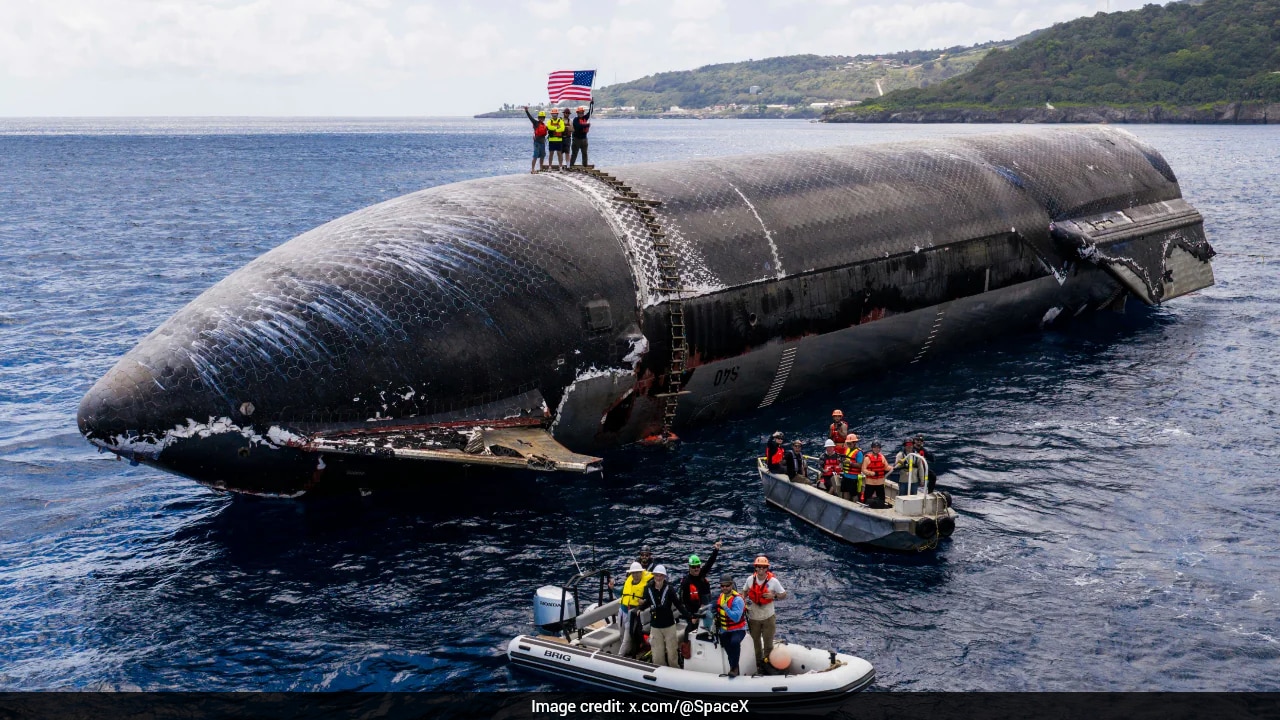
SpaceX recovers Starship from Indian Ocean and ships it back to Texas
SpaceX recovers its most recently launched Starship from the Indian Ocean about a month after launch, marking a major sa...

CBC reverses guidance on describing 9/11 as “terrorist attacks” after backlash
The Canadian Broadcasting Corporation (CBC) tells journalists not to describe the Sept. 11, 2001, attacks as “terrorist...