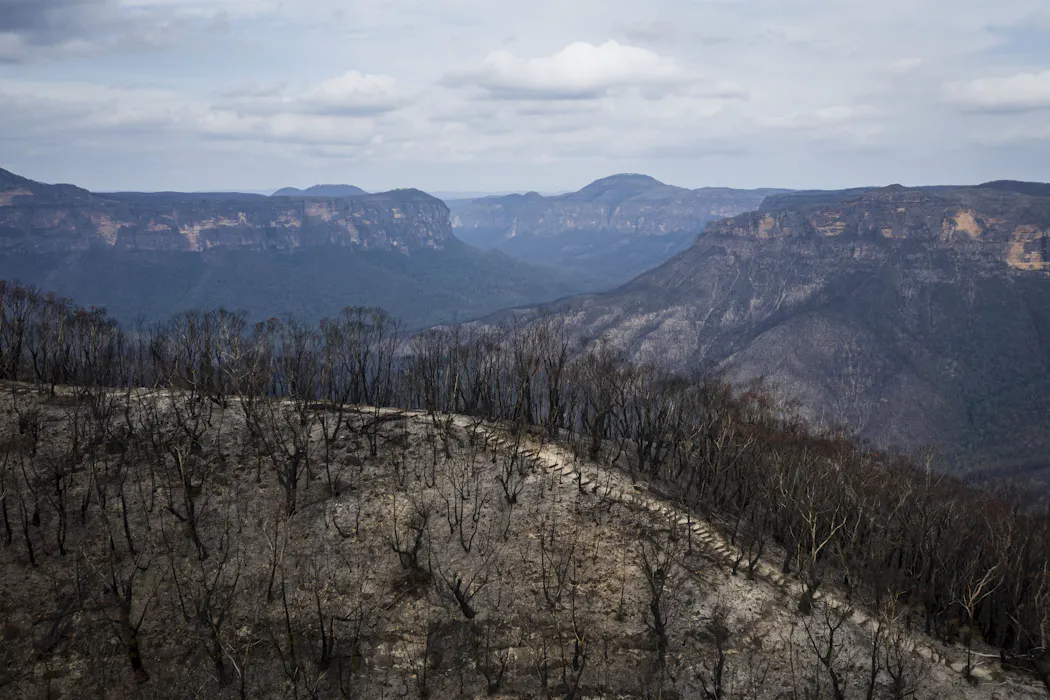
Severe bushfires known as the Black Summer megafires (2019–20) burn through parts of the Blue Mountains, and years later the region’s forests have not fully recovered. After the fires, heavy rainfall triggers rapid regrowth, giving visible signs of recovery such as new plant growth. However, researchers warn that these surface changes can mask slower or incomplete recovery in the ecosystem overall.
One contributing factor is pre-fire climate stress. In the lead-up to the megafires, rainfall in southeastern Australia is reported to be significantly below average, and cool-season precipitation is described as about half of normal for several years. When fires start, exceptionally dry conditions help them spread into areas that are usually less affected by fire, including wetlands and rainforests.
Across the reporting, the core focus is that rainfall-driven regrowth does not necessarily mean full ecological restoration. The outlets emphasize the importance of understanding both the immediate post-fire response and the longer-term effects of unusually dry conditions before and during the fires.