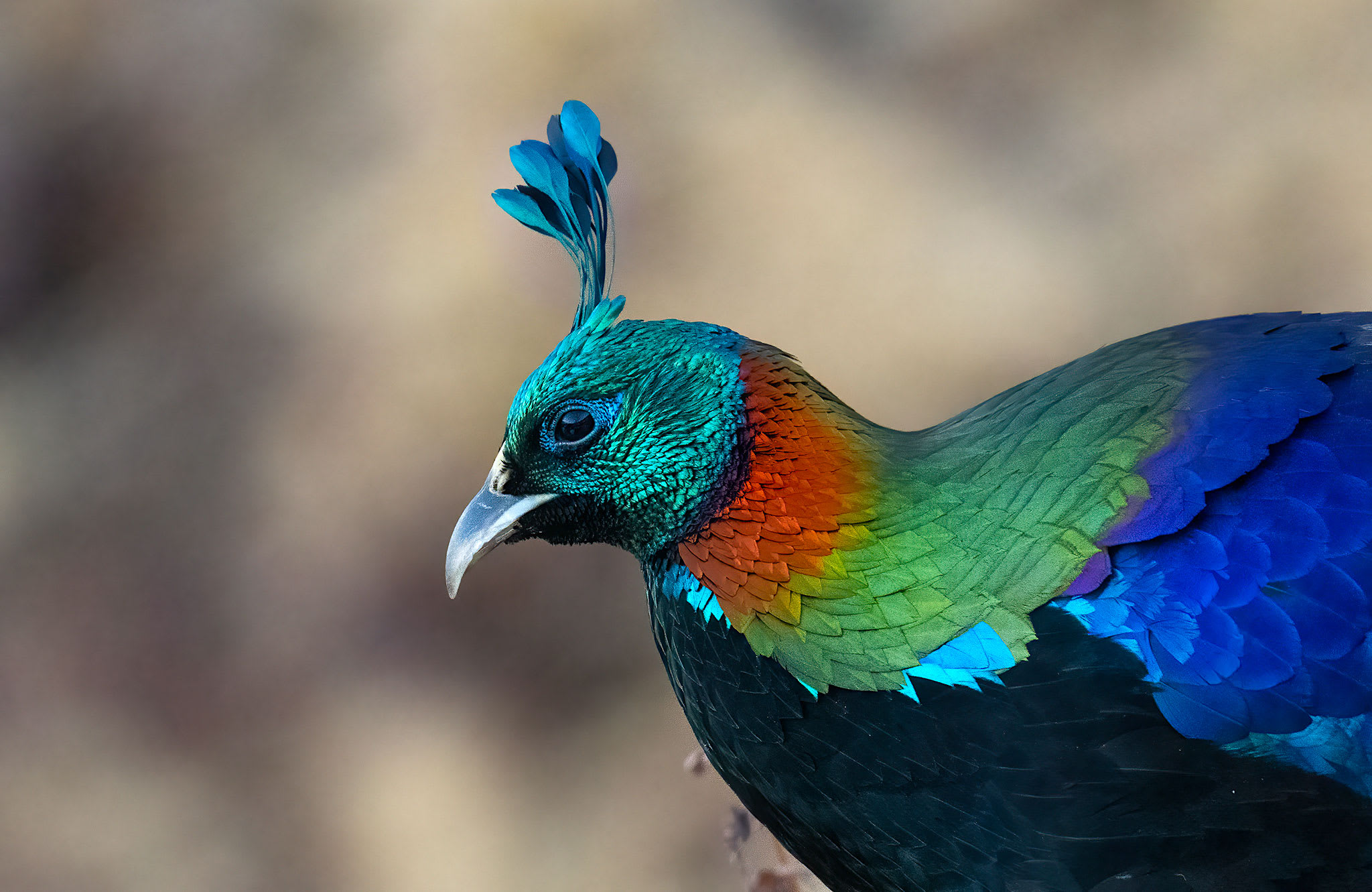
Μονάλ: Το εντυπωσιακό πτηνό των Ιμαλαΐων που αλλάζει η φωνή του
Η απότομη αύξηση της ανθρώπινης δραστηριότητας επηρεάζει τον τρόπο με τον οποίο ζει και επικοινωνεί ένα εμβληματικό πουλί των Ιμαλαΐων, σύμφωνα με δύο μελέτες Ινδών ερευνητών.
Το μονάλ των Ιμαλαΐων, ένα είδος φασιανού που ζει στα ορεινά δάση και τα αλπικά λιβάδια της περιοχής, είναι βαθιά συνδεδεμένο με την πολιτιστική ταυτότητα των Ιμαλαΐων. Το αρσενικό ξεχωρίζει για το εντυπωσιακό πράσινο, μπλε και χάλκινο φτέρωμά του. Είναι το κρατικό πτηνό της ινδικής πολιτείας Ουταραχάντ και το εθνικό πτηνό του Νεπάλ.
Ωστόσο, οι δύο μελέτες δείχνουν ότι η ανάπτυξη υποδομών, ο τουρισμός και η αυξημένη ανθρώπινη παρουσία πιέζουν τον βιότοπό του, ενώ ο θόρυβος από την ανθρώπινη δραστηριότητα επηρεάζει ακόμη και τον τρόπο με τον οποίο επικοινωνεί με πιθανούς συντρόφους και ανταγωνιστές.
Μετακινείται ολοένα και ψηλότερα
Η μία μελέτη διαπίστωσε ότι τα μονάλ μετακινούνται σε μεγαλύτερα υψόμετρα, καθώς τα φυσικά τους ενδιαιτήματα στα αλπικά λιβάδια πάνω από τη γραμμή των δέντρων περιορίζονται και καταλαμβάνονται από ανθρώπινες δραστηριότητες.
Οι ερευνητές μελέτησαν πώς η κλιματική αλλαγή ενδέχεται να επηρεάσει τον κατάλληλο βιότοπο του είδους στις ινδικές περιοχές των Ιμαλαΐων, χρησιμοποιώντας κλιματικά μοντέλα και σενάρια εκπομπών που χρησιμοποιούνται και από τη Διακυβερνητική Επιτροπή για την Κλιματική Αλλαγή (IPCC).
Τα αποτελέσματα δείχνουν ότι η κατάλληλη περιοχή για το μονάλ αναμένεται να συρρικνωθεί και να κατακερματιστεί έως το 2100. Η άνοδος της θερμοκρασίας και το λιώσιμο του χιονιού επιτρέπουν τη μετακίνηση της βλάστησης και των πουλιών σε μεγαλύτερα υψόμετρα, την ώρα που οι ανθρώπινες δραστηριότητες περιορίζουν ακόμη περισσότερο τα διαθέσιμα ενδιαιτήματα.
Η κατάσταση αυτή μπορεί να δυσκολέψει την εποχική μετακίνηση των πουλιών και να οδηγήσει σε μικρότερους και απομονωμένους πληθυσμούς. Αυτό, σύμφωνα με τη μελέτη, μειώνει τις πιθανότητες αναπαραγωγής μεταξύ διαφορετικών ομάδων και αυξάνει τον κίνδυνο μακροπρόθεσμης μείωσης ή ακόμη και τοπικής εξαφάνισης.
Αλλάζει και τη «φωνή» του
Η δεύτερη μελέτη επικεντρώθηκε στη συμπεριφορά του μονάλ και πραγματοποιήθηκε σε δύο κοιλάδες του καταφυγίου Kedarnath Musk Deer Sanctuary στην Ουταραχάντ.
Στην τουριστική περιοχή Chopta, όπου υπάρχει έντονη κυκλοφορία και μεγάλη επισκεψιμότητα, και στην πιο ήσυχη κοιλάδα Madmaheshwar, οι ερευνητές κατέγραψαν περισσότερες από 700 φωνές μονάλ για έναν χρόνο, από τον Απρίλιο του 2023.
Τα πουλιά που ζούσαν σε πιο θορυβώδες περιβάλλον παρήγαγαν σταθερά φωνές υψηλότερης συχνότητας σε σχέση με εκείνα στις πιο ήσυχες περιοχές. Παράλληλα, στο Chopta οι φωνές είχαν μικρότερη διάρκεια, πιθανότατα ώστε να ξεχωρίζουν από τον χαμηλής συχνότητας θόρυβο της κυκλοφορίας και των τουριστών.
Οι ερευνητές διευκρινίζουν ότι αυτό δεν σημαίνει πως το είδος έχει υποστεί μόνιμη ή εξελικτική αλλαγή στη συχνότητα της φωνής του. Αντίθετα, τα ευρήματα δείχνουν ότι το μονάλ διαθέτει συμπεριφορική ευελιξία και προσαρμόζει προσωρινά την επικοινωνία του ανάλογα με το ακουστικό περιβάλλον.
Οι αλλαγές αυτές ενδέχεται να επηρεάσουν σημαντικές λειτουργίες, όπως την επικοινωνία μεταξύ των πουλιών και την αναπαραγωγή.
Our state bird is changing its voice to be heard over us If you’ve been to Chopta, Tungnath or the high meadows of Garhwal, you may have seen it: the Himalayan monal, the male shining in green, blue, purple and copper like it’s been painted by hand. It’s Uttarakhand’s state bird and Nepal’s national bird, and it lives high in the mountains, between about 2,100 and 4,500 metres. Now, two studies by researchers from HNB Garhwal University show that this bird is changing, and we’re the reason. For the first study, published in the journal Behavioural Processes in August 2025, Rajeev Lochan, Dinesh Kumar Sharma and Anand Kumar placed recording devices in two valleys of the Kedarnath Musk Deer Sanctuary. One was Madmaheshwar, a quiet valley with no road. The other was Chopta, packed with vehicles, tourists and pilgrims. Between April 2023 and June 2024, they recorded 719 monal calls. What they found was clear. Monals in noisy Chopta were calling at a higher pitch than those in quiet Madmaheshwar. The likely reason is simple: human noise from traffic and crowds is mostly low-pitched, so the birds raise their pitch to be heard above it. The change is so subtle that our ears can’t catch it, but the recordings can. The researchers are careful to say this isn’t a permanent change in the species. It shows the birds are adjusting their behaviour to survive in a noisier world. But these calls aren’t just sounds. They’re how monals find mates, warn rivals and stay connected. If they can’t hear each other properly, it could affect how they breed and survive. The team calls this a preliminary study, and says much more research is needed to know the long-term impact. The second study, published in Scientific Reports in 2025, looked at where the monal can live in the future. Using over 5,000 records of where the bird has been seen, and climate models used by the UN’s climate panel, the researchers projected that climate change will keep shrinking and breaking up the monal’s habitat across Uttarakhand and Himachal Pradesh through the end of this century. As snow melts and the climate warms, the birds are moving higher up the mountains. At the same time, the alpine meadows where they live are getting crowded with people. Pushed from below and limited at the top, monals could end up in small, disconnected pockets. That makes it harder for groups to meet and breed, and raises the risk of local populations dying out. Right now, the monal isn’t listed as endangered. But that’s exactly why these findings matter. As one environmental expert put it, if even the monal has to change both its voice and its address, what’s happening to the more sensitive species no one is studying? A bird that has lived in these mountains for thousands of years now has to raise its voice and climb higher just to survive us.
— Kumaon Jagran (@KumaonJagran) October 7, 2026
«Το οικοσύστημα ζητά χώρο και ησυχία»
Ο επικεφαλής των δύο μελετών, δρ Ρατζίβ Λόχαν, σημειώνει ότι το μονάλ επιλέχθηκε επειδή έχει σχετικά περιορισμένο εύρος ενδιαιτήματος και μετακινείται εποχικά μεταξύ χαμηλότερων ορεινών περιοχών και ζωνών μεγάλου υψομέτρου. Ως εκ τούτου, μπορεί να λειτουργήσει ως δείκτης της υγείας των οικοσυστημάτων στα βορειοδυτικά Ιμαλάια.
Οι ερευνητές υπογραμμίζουν ότι πρόκειται για προκαταρκτικά ευρήματα και ότι απαιτείται περαιτέρω έρευνα για να εξακριβωθούν οι μακροπρόθεσμες οικολογικές συνέπειες.
Ωστόσο, οι δύο μελέτες αποτελούν προειδοποίηση για την ευρύτερη πίεση που δέχεται η βιοποικιλότητα των Ιμαλαΐων από την τουριστική ανάπτυξη, την αστικοποίηση και την κλιματική αλλαγή.
«Όταν ένα είδος πρέπει να ανεβάσει τη φωνή του για να ακουστεί πάνω από την τουριστική κίνηση ή να ανέβει ψηλότερα επειδή τα λιβάδια γίνονται πιο πολυσύχναστα, αυτό αποκαλύπτει πώς η ανθρώπινη πίεση αλλάζει τους κανόνες της ζωής στα Ιμαλάια», ανέφερε ο καθηγητής δημόσιας πολιτικής Αντζάλ Πράκας.
Όπως χαρακτηριστικά σημείωσε, «ακούγοντας το μονάλ, ακούμε τα Ιμαλάια να ζητούν χώρο, ησυχία και φροντίδα».Με πληροφορίες από BBC
1 hour ago