


A new international study, published in *Science*, produces the first global maps estimating where arbuscular mycorrhizal fungi occur and how much fungal biomass their underground networks contain. The research focuses on arbuscular mycorrhizal fungi, which form extensive hyphal networks in soils and support plant growth by exchanging nutrients and water with most land plants. Across the planet, the study estimates that these fungi are widespread and reach extremely large total spatial scales, helping plants obtain resources while also drawing carbon into soils. This soil carbon storage is linked to climate regulation. The *Science* report also describes the networks as ancient, noting they have been forming for hundreds of millions of years. By combining large-scale estimation with newly compiled mapping approaches, the work aims to quantify the true extent of these subterranean systems rather than relying only on localized observations. Together, the reported results characterize the global distribution and estimated mass of these fungal networks and their ecological role in sustaining vegetation and influencing Earth’s carbon cycle.
First global maps estimate massive underground networks of arbuscular mycorrhizal fungi
A new international study, published in *Science*, produces the first global maps estimating where arbuscular mycorrhizal fungi occur and how much fungal biomass their underground networks contain. Th...
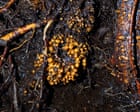
- Researchers publish the first global maps estimating the distribution and mass of arbuscular mycorrhizal fungal networks.
- Arbuscular mycorrhizal fungi form hyphal (threadlike) underground networks that help plants obtain water and nutrients.
- The fungi partner with most land plants, with sources citing that they support more than 70% of plant species.
- The networks help regulate climate by transferring plant-produced carbon into soils.
- The study reports that these fungal networks have been forming for roughly 475 million years.
First ever global mapping of arbuscular mycorrhizal fungi shows scale of hyphal systems that sustain plant lifeOur planet’s soils contain enough of the subterranean fungi that sustain plant life and help regulate the climate to stretch from the Earth to the sun almost three-quarters of a billion times, a groundbreaking new study has found.Arbuscular mycorrhizal fungi are networks of tubular cells called hyphae that sustain life on Earth by forming critical partnerships with more than 70% of plants. The networks, which have been forming for about 475 million years, provide nutrients and water in exchange for the carbon produced by the plants, and help to regulate the climate by drawing carbon into soils. Continue reading...
2 months agoMycorrhizal fungi form underground networks that sustain plant life and help regulate Earth's climate by drawing carbon into soils. In a study published in Science, an international team of researchers produced the first global maps estimating the distribution and mass of the Earth's arbuscular mycorrhizal fungal networks.
2 months ago
Trump signs order creating U.S. Space Academy to train for Space Force and space industry
President Donald Trump signs an executive order creating a new U.S. Space Academy, a space-focused military educational...

CBC reverses guidance on describing 9/11 as “terrorist attacks” after backlash
The Canadian Broadcasting Corporation (CBC) reverses internal guidance that told some staff not to describe the Sept. 11...

Trump administration considers land transfer involving a parcel of Yosemite for access to private development
The Trump administration is considering transferring a small parcel of Yosemite National Park to a private developer, re...